
Running an in-house marketing department can be expensive, time-consuming, and difficult to scale. Hiring specialists for SEO, content, website development, social media, email marketing, and design often requires a significant investment in salaries, software, and training.
That’s why many businesses are choosing to outsource their marketing function to experienced digital marketing agencies.
In this guide, you’ll learn how outsourcing works, when it makes sense, and how businesses can reduce costs while improving marketing performance.
What Does Outsourcing Your Marketing Mean?
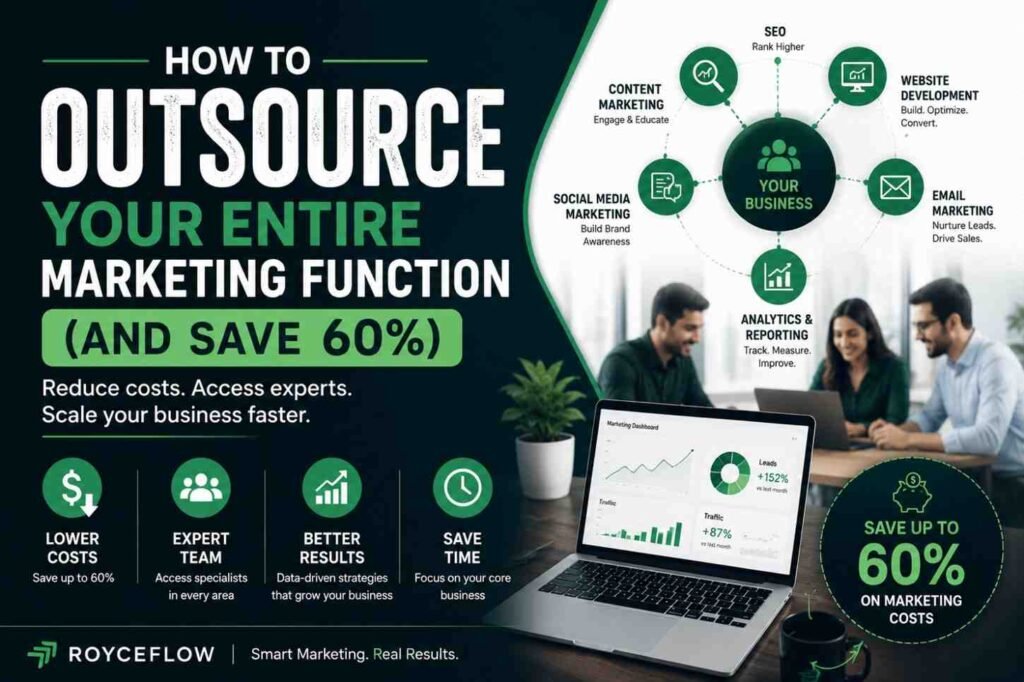
Marketing outsourcing means partnering with an external agency or marketing team to handle part—or all—of your marketing activities.
Instead of hiring multiple employees, you gain access to specialists who work together to achieve your business goals.
An outsourced marketing team may manage:
- Search Engine Optimization (SEO)
- Website Development
- Content Marketing
- Social Media Marketing
- Email Marketing
- Conversion Rate Optimization (CRO)
- Analytics & Reporting
- Marketing Strategy
Think of it as having your own marketing department without employing a full-time internal team.
Why Are Businesses Outsourcing Marketing?
Businesses outsource marketing for three main reasons:
1. Lower Costs
Hiring an internal marketing team can be expensive.
You may need:
- Marketing Manager
- SEO Specialist
- Content Writer
- Graphic Designer
- Social Media Manager
- Web Developer
Along with salaries, you’ll also pay for:
- Software subscriptions
- Employee benefits
- Office space
- Equipment
- Recruitment
- Training
Outsourcing combines these skills into one service agreement, which can reduce costs depending on your business needs.
2. Access to Specialists
Marketing changes constantly.
SEO algorithms evolve.
Social media trends shift.
AI tools emerge.
Instead of relying on one generalist, outsourcing gives you access to specialists with expertise in different marketing disciplines.
3. Faster Results
Building an internal team takes time.
Recruiting, onboarding, and training employees may take several months.
An experienced agency can begin executing your marketing strategy almost immediately.
What Can You Outsource?
Most businesses outsource:
SEO
- Technical SEO
- On-page SEO
- Keyword research
- Link building
- Local SEO
Website Development
- Business websites
- Landing pages
- Website maintenance
- Speed optimization
Content Marketing
- Blog writing
- SEO articles
- Website copy
- Case studies
Social Media Marketing
- Content planning
- Post creation
- Community management
- Organic growth
Email Marketing
- Newsletter campaigns
- Customer nurturing
- Promotional emails
- Marketing automation
Analytics & Reporting
- Google Analytics
- Search Console reporting
- Monthly reports
- KPI tracking
When Should You Outsource Marketing?
Marketing outsourcing makes sense if:
- Your business is growing quickly
- Hiring a full team isn’t practical
- You need specialized expertise
- Your current marketing isn’t delivering results
- Your internal team lacks certain skills
- You want to scale without increasing headcount
In-House vs Outsourced Marketing
| In-House Team | Outsourced Agency |
|---|---|
| Higher hiring costs | Lower operational costs |
| Limited expertise | Access to multiple specialists |
| Slower hiring process | Faster implementation |
| Employee management required | Managed by the agency |
| Fixed salaries | Flexible engagement |
Can You Really Save Up to 60%?
Potentially—but it depends on your current setup.
If your business would otherwise need to hire several full-time marketing professionals, outsourcing may reduce overall costs because you’re sharing agency resources rather than employing every specialist directly.
However, actual savings vary based on:
- Company size
- Marketing requirements
- Scope of work
- Existing team
- Agency pricing
The important point isn’t just saving money—it’s achieving better marketing results with the resources you invest.
Common Mistakes When Outsourcing Marketing
Choosing Based on Price Alone
The cheapest option isn’t always the best.
Look for experience, communication, and proven results.
No Clear Goals
Before hiring an agency, define your objectives.
Examples:
- Generate leads
- Increase website traffic
- Improve Google rankings
- Build brand awareness
Expecting Overnight Results
Marketing takes time.
SEO, content marketing, and organic growth require consistent effort before delivering long-term results.
Ignoring Reporting
A good agency should provide regular reports showing:
- Website traffic
- Keyword rankings
- Leads generated
- Conversion rates
- Campaign performance
How to Choose the Right Marketing Agency
Before signing an agreement, ask:
- Do they have relevant experience?
- Can they show case studies?
- How will success be measured?
- What services are included?
- How often will they communicate?
- Who will manage the project?
A reliable agency should focus on long-term business growth rather than making unrealistic promises.
Is Marketing Outsourcing Right for Small Businesses?
For many small and medium-sized businesses, outsourcing can be an effective way to access marketing expertise without building a large internal department.
It allows business owners to focus on operations, customer service, and growth while experienced professionals handle marketing execution.
Final Thoughts
Outsourcing your marketing function isn’t simply about reducing costs—it’s about gaining access to the right expertise, improving efficiency, and creating a scalable growth strategy.
Whether you need SEO, website development, content marketing, social media management, or a complete marketing strategy, partnering with the right agency can help your business achieve sustainable long-term growth.
The key is choosing a trusted partner that understands your goals, communicates clearly, and measures success through real business outcomes rather than vanity metrics.