
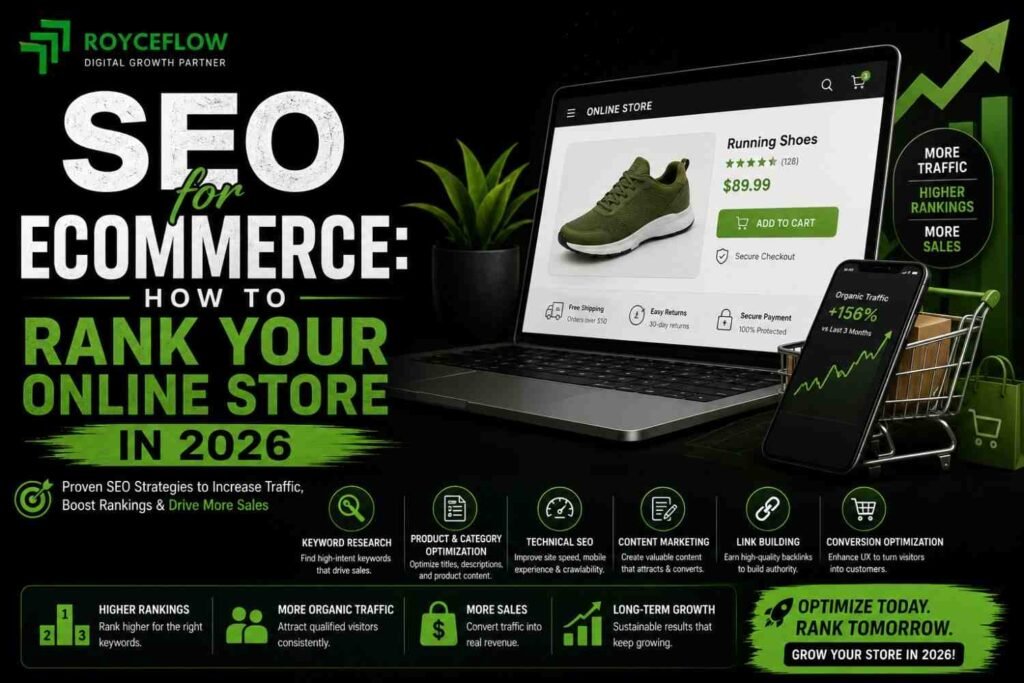
SEO for eCommerce store on Google is becoming more competitive every year. With thousands of online stores selling similar products, simply launching a website is no longer enough. Businesses need a well-planned SEO strategy to attract qualified traffic, improve visibility, and increase online sales.
In 2026, eCommerce SEO goes beyond keywords. Google prioritizes websites that offer fast performance, helpful content, excellent user experience, and genuine value for shoppers. By implementing the right SEO practices, your online store can achieve higher rankings and generate consistent organic revenue without relying entirely on paid advertising.
Conduct Keyword Research Based on Buyer Intent
Successful eCommerce SEO begins with understanding what your customers are searching for.
Focus on high-intent keywords such as:
- Buy running shoes online
- Best wireless headphones
- Affordable office furniture
- Organic skincare products
- Men’s leather wallets
Include a mix of:
- Product keywords
- Category keywords
- Long-tail keywords
- Question-based keywords
- Local keywords (if applicable)
Targeting the right keywords attracts visitors who are ready to make a purchase.
Optimize Product Pages
Every product page should be optimized for both search engines and customers.
Include:
- Unique product titles
- Detailed product descriptions
- High-quality images
- Optimized image alt text
- Product specifications
- Customer reviews
- Frequently Asked Questions
Avoid copying manufacturer descriptions, as duplicate content can affect rankings.
Create SEO-Friendly Category Pages
Category pages often attract more organic traffic than individual product pages.
Optimize them with:
- Keyword-rich headings
- Helpful introductory content
- Internal links
- Product filters
- Clear navigation
- Optimized meta titles and descriptions
Well-structured category pages improve both SEO and user experience.
Improve Website Speed
Page speed is a confirmed ranking factor and directly impacts conversions.
Improve performance by:
- Compressing images
- Using modern image formats
- Enabling browser caching
- Minimizing JavaScript and CSS
- Using a Content Delivery Network (CDN)
- Choosing reliable hosting
A faster website keeps visitors engaged and reduces bounce rates.
Optimize for Mobile Users
Most online shopping now happens on mobile devices.
Ensure your website has:
- Responsive design
- Mobile-friendly navigation
- Large clickable buttons
- Fast mobile loading speeds
- Simple checkout process
A seamless mobile experience improves rankings and sales.
Build a Strong Site Structure
An organized website helps both users and search engines.
Example structure:
Home
→ Categories
→ Subcategories
→ Product Pages
Keep important pages within a few clicks from the homepage and use descriptive URLs.
Publish Helpful Content
Content marketing helps attract customers before they are ready to buy.
Examples include:
- Buying guides
- Product comparisons
- Gift guides
- Industry trends
- How-to articles
- Product care tips
Educational content increases topical authority and supports product rankings.
Implement Technical SEO
Technical SEO ensures search engines can crawl and index your website efficiently.
Focus on:
- XML sitemap
- Robots.txt
- Canonical URLs
- Structured data (Schema Markup)
- HTTPS security
- Fixing broken links
- Eliminating duplicate content
Regular technical audits help maintain strong website performance.
Optimize for Voice Search
More consumers use voice assistants to search for products.
Create content that answers conversational queries like:
- What is the best laptop for students?
- Which running shoes are best for beginners?
- Where can I buy eco-friendly products online?
Natural language optimization can improve visibility in voice search results.
Build High-Quality Backlinks
Backlinks remain one of Google’s strongest ranking signals.
Earn links by:
- Publishing valuable content
- Guest posting
- Digital PR
- Industry partnerships
- Product reviews
- Resource pages
Focus on quality rather than quantity.
Encourage Customer Reviews
Reviews improve trust and can increase click-through rates.
Encourage customers to leave reviews after every purchase.
User-generated content also keeps product pages fresh and relevant.
Optimize Internal Linking
Internal links help search engines discover important pages while guiding customers through your store.
Link between:
- Blog posts
- Categories
- Related products
- Best-selling products
- Buying guides
A strong internal linking strategy distributes authority throughout your website.
Track SEO Performance
Monitor your SEO efforts using tools such as:
- Google Analytics 4
- Google Search Console
- Keyword tracking tools
- SEO audit software
Track:
- Organic traffic
- Rankings
- Click-through rates
- Conversion rates
- Revenue from organic search
Use this data to continually refine your strategy.
Common eCommerce SEO Mistakes
Avoid these common issues:
- Duplicate product descriptions
- Thin content
- Slow-loading pages
- Poor mobile experience
- Missing image alt text
- Broken links
- Weak internal linking
- Ignoring technical SEO
Fixing these problems can significantly improve rankings.
Why eCommerce SEO Matters in 2026
As online competition continues to grow, businesses that invest in SEO will have a significant advantage. Organic traffic delivers qualified visitors, reduces customer acquisition costs, and builds long-term visibility.
A well-optimized online store becomes a valuable business asset, generating consistent traffic and sales even without increasing advertising spend.
Final Thoughts
SEO remains one of the most effective ways to grow an online store in 2026. By focusing on keyword research, technical optimization, content marketing, mobile performance, and user experience, businesses can improve their Google rankings and attract customers who are actively searching for their products.
Consistent optimization, regular content updates, and a customer-first approach will help your eCommerce store stay competitive and achieve sustainable long-term growth.
Frequently Asked Questions
How long does eCommerce SEO take to show results?
Most online stores begin seeing measurable improvements within 3–6 months, depending on competition, website authority, and the consistency of SEO efforts.
Is SEO better than paid advertising for eCommerce?
SEO provides long-term organic traffic and sustainable growth, while paid advertising offers immediate visibility. Many successful stores use both together.
Which platform is best for eCommerce SEO?
Platforms like Shopify, WooCommerce, Magento, and BigCommerce all support strong SEO when properly optimized.
How important are product descriptions for SEO?
Very important. Unique, detailed product descriptions help search engines understand your products and improve your chances of ranking higher.
What is the most important ranking factor for eCommerce SEO?
There isn’t a single ranking factor. High-quality content, technical SEO, page speed, backlinks, user experience, and search intent all play essential roles.