
Search Engine Optimization (SEO) continues to evolve every year, and 2026 is no exception. With AI-powered search experiences, evolving user behavior, and frequent algorithm updates, businesses must adapt to remain visible in search results.
If you’ve been working on SEO for the last 30 days—or are planning your next strategy—this article highlights what’s changed in 2026 and the tactics that are delivering real results.
Why SEO Continues to Matter in 2026
Despite the rise of AI chatbots and alternative search platforms, search engines remain one of the largest sources of qualified website traffic.
SEO helps businesses:
- Increase organic traffic
- Build long-term brand authority
- Generate qualified leads
- Reduce dependence on paid advertising
- Improve website credibility
Businesses investing consistently in SEO continue to benefit from sustainable growth.
What Changed in SEO During 2026?
Search engines have become better at understanding user intent rather than simply matching keywords.
Major changes include:
- Greater emphasis on content quality
- Stronger focus on user experience
- AI-generated search summaries
- Improved spam detection
- Better understanding of search intent
- Increased importance of topical authority
- Continued focus on mobile performance
Success now depends on providing useful, trustworthy, and well-structured content.
1. User Intent Matters More Than Keywords
Modern SEO prioritizes solving users’ problems instead of repeating exact-match keywords.
Instead of writing solely for search engines:
- Answer common questions.
- Cover topics in depth.
- Provide practical solutions.
- Match the user’s search intent.
Content that genuinely helps users is more likely to perform well.
2. High-Quality Content Wins
Publishing more articles doesn’t necessarily improve rankings.
Businesses should focus on:
- Original insights
- Expert knowledge
- Accurate information
- Updated content
- Clear formatting
Quality consistently outperforms quantity.
3. Topic Clusters Outperform Isolated Blogs
Instead of publishing unrelated articles, businesses are organizing content into topic clusters.
For example, a digital marketing agency could create content around:
- SEO
- Web Development
- Web Design
- Social Media Marketing
- Google Ads
- Content Marketing
Interlinking related articles helps search engines understand your expertise.
4. User Experience Is a Ranking Factor
Search engines increasingly reward websites that provide a smooth user experience.
Important areas include:
- Fast loading pages
- Mobile responsiveness
- Clear navigation
- Readable typography
- Accessible design
- Secure HTTPS connections
A better experience keeps visitors engaged and reduces bounce rates.
5. Updating Existing Content Delivers Results
Refreshing older content is often more effective than constantly publishing new articles.
Update:
- Statistics
- Examples
- Images
- Internal links
- FAQs
- Outdated information
Regular updates help maintain relevance and improve rankings over time.
6. Internal Linking Has Greater Value
Strategic internal links help users discover related content and make it easier for search engines to understand your website structure.
Good internal linking:
- Improves navigation
- Distributes page authority
- Increases page views
- Strengthens topic relevance
Avoid excessive or irrelevant links.
7. Local SEO Continues to Grow
Businesses targeting specific locations should optimize for local search by:
- Keeping business information accurate
- Collecting customer reviews
- Creating location-specific pages
- Optimizing Google Business Profile
- Publishing local content
Local SEO remains essential for service-based businesses.
8. AI Is a Tool, Not a Replacement
AI has become a valuable assistant for:
- Research
- Content planning
- Outlining articles
- Generating ideas
- Improving productivity
However, successful content still requires human expertise, editing, and original insights to stand out.
9. Technical SEO Still Matters
Even the best content can struggle if technical issues prevent search engines from crawling or indexing your site.
Regularly monitor:
- Crawl errors
- Broken links
- XML sitemaps
- Duplicate content
- Page speed
- Structured data
- Mobile usability
A technically sound website creates a strong foundation for SEO success.
10. Brand Authority Is More Important Than Ever
Search engines increasingly favor businesses that demonstrate expertise and trust.
Build authority by:
- Publishing helpful content consistently
- Earning quality backlinks
- Showcasing customer reviews
- Sharing case studies
- Maintaining active social media profiles
- Keeping author information transparent
Strong brands tend to perform better in search results over time.
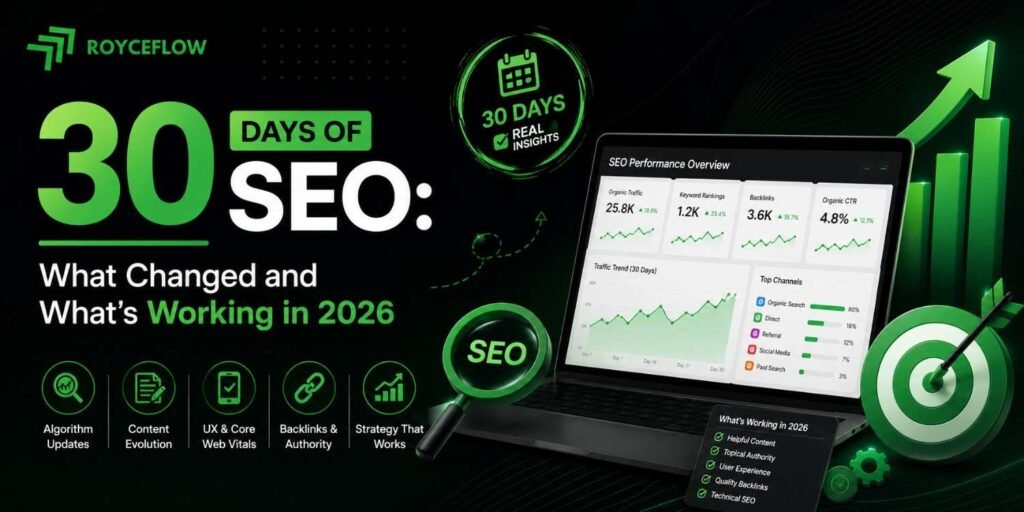
What’s Working in SEO Right Now?
Businesses seeing positive results in 2026 are focusing on:
- Publishing comprehensive content
- Building topical authority
- Improving website speed
- Optimizing for mobile users
- Strengthening internal linking
- Updating older articles
- Creating helpful FAQs
- Earning quality backlinks
- Tracking performance with analytics
- Providing an excellent user experience
These strategies support sustainable, long-term organic growth.
SEO Practices That Are Losing Effectiveness
Some outdated techniques no longer deliver results and can even harm rankings.
Avoid:
- Keyword stuffing
- Buying low-quality backlinks
- Publishing thin content
- Duplicate articles
- Hidden text
- Clickbait titles
- Ignoring mobile optimization
- Overusing AI-generated content without editing
Modern SEO rewards value and relevance over shortcuts.
How to Measure Your SEO Progress
Track performance using metrics such as:
- Organic traffic
- Keyword rankings
- Click-through rate (CTR)
- Conversion rate
- Bounce rate
- Indexed pages
- Backlink growth
- Average engagement time
- Leads generated from organic search
Monitoring these KPIs helps identify opportunities for continuous improvement.
Building a Long-Term SEO Strategy
Rather than chasing every algorithm update, focus on building a sustainable strategy:
- Understand your audience.
- Publish helpful, original content.
- Improve technical performance.
- Organize content into topic clusters.
- Earn trustworthy backlinks.
- Monitor analytics and refine your approach.
- Keep content updated regularly.
Consistency is one of the strongest advantages in SEO.
Final Thoughts
SEO in 2026 is less about finding loopholes and more about delivering genuine value. Search engines continue to improve at understanding user intent, evaluating content quality, and rewarding websites that provide exceptional experiences.
Businesses that invest in high-quality content, technical excellence, topical authority, and continuous optimization are well-positioned for long-term success. Instead of reacting to every change, focus on building a website that users trust and search engines can easily understand.
Frequently Asked Questions (FAQs)
1. Is SEO still worth investing in during 2026?
Yes. SEO remains one of the most cost-effective digital marketing strategies, providing long-term organic traffic, qualified leads, and sustainable business growth.
2. Has AI replaced traditional SEO?
No. AI is a valuable tool for research, planning, and productivity, but successful SEO still depends on human expertise, original insights, and high-quality content.
3. How often should I update my website content?
Review important pages every few months or whenever significant changes occur in your industry. Regular updates help maintain accuracy, relevance, and search visibility.
4. What is topical authority in SEO?
Topical authority is established by creating comprehensive, interconnected content around a specific subject, demonstrating expertise to both users and search engines.
5. What should businesses focus on for SEO success in 2026?
Businesses should prioritize helpful content, excellent user experience, technical SEO, mobile optimization, strong internal linking, topical authority, and consistent performance tracking.