
In today’s digital world, websites are much more than online brochures—they are powerful tools for businesses, organizations, and individuals. From eCommerce stores and blogs to social media platforms and web applications, everything relies on web development.
But what exactly is web development, and how does it work? Let’s explore.
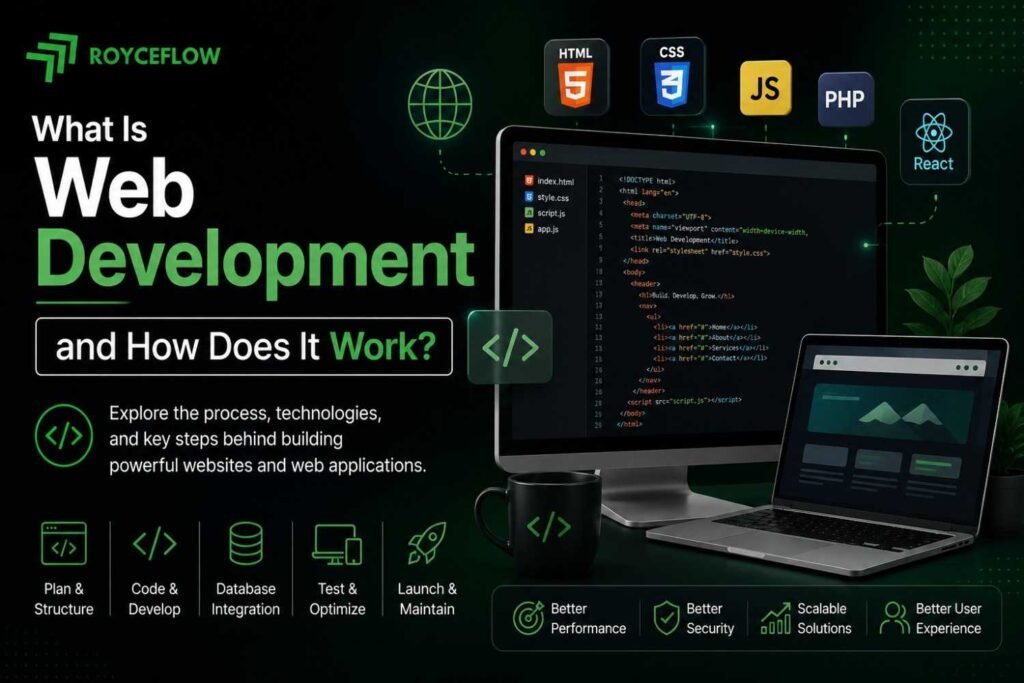
What Is Web Development?
Web development is the process of building, programming, and maintaining websites and web applications. It involves writing code that makes a website functional, interactive, secure, and responsive across different devices.
Unlike web design, which focuses on the visual appearance of a website, web development focuses on the technical side that powers everything behind the scenes.
A web developer transforms a design into a fully functional website that users can interact with.
Why Is Web Development Important?
Web development plays a crucial role in creating websites that are reliable, fast, and user-friendly. A professionally developed website helps businesses:
- Build credibility
- Reach customers online
- Improve website performance
- Increase conversions
- Support business growth
- Enhance security
- Deliver a seamless user experience
Without web development, a website would simply be a static design with no functionality.
How Does Web Development Work?
Developing a website follows a structured process to ensure quality, performance, and usability.
1. Requirement Analysis
The first step is understanding the project’s goals.
Developers gather information such as:
- Business objectives
- Target audience
- Required features
- Budget
- Timeline
This helps create a clear development roadmap.
2. Planning the Website
Next, developers plan the website structure, including:
- Number of pages
- Navigation
- Database requirements
- User roles
- Content organization
- Technical architecture
Proper planning reduces errors during development.
3. Front-End Development
Front-end development focuses on everything users see and interact with.
Common technologies include:
- HTML
- CSS
- JavaScript
Front-end developers create:
- Navigation menus
- Buttons
- Forms
- Images
- Layouts
- Animations
- Responsive designs
Their goal is to ensure the website looks great and works smoothly on all devices.
4. Back-End Development
Back-end development powers the functionality behind the scenes.
It manages:
- Databases
- User authentication
- Business logic
- APIs
- Server-side processing
Popular back-end technologies include:
- PHP
- Node.js
- Python
- Java
- Laravel
- Express.js
Without the back end, users wouldn’t be able to log in, submit forms, or make online purchases.
5. Database Integration
Most modern websites store information in databases.
Examples include:
- User accounts
- Orders
- Products
- Blog posts
- Contact form submissions
Popular database systems include:
- MySQL
- PostgreSQL
- MongoDB
- SQLite
Databases allow websites to store, retrieve, and manage information efficiently.
6. Testing
Before launching, developers test the website to identify and fix issues.
Testing includes:
- Functional testing
- Mobile responsiveness
- Browser compatibility
- Performance testing
- Security testing
- Form validation
- Broken link checks
This ensures users have a smooth experience.
7. Deployment
Once testing is complete, the website is deployed to a live server.
Deployment involves:
- Uploading website files
- Configuring the domain
- Setting up hosting
- Installing SSL certificates
- Connecting databases
- Configuring email services
After deployment, the website becomes accessible worldwide.
8. Maintenance and Updates
Web development doesn’t end after launch.
Regular maintenance includes:
- Security updates
- Bug fixes
- Performance optimization
- Backup management
- Content updates
- Feature enhancements
Ongoing maintenance keeps the website secure and efficient.
Types of Web Development
Front-End Development
Front-end development focuses on the visual and interactive elements users see.
Common technologies include:
- HTML
- CSS
- JavaScript
- React
- Vue.js
- Angular
Back-End Development
Back-end development manages the server, database, and application logic.
Popular technologies include:
- PHP
- Node.js
- Python
- Java
- ASP.NET
Full-Stack Development
Full-stack developers handle both front-end and back-end development, allowing them to build complete web applications from start to finish.
Essential Technologies Used in Web Development
Modern web development uses a combination of technologies.
Front-End
- HTML
- CSS
- JavaScript
- Bootstrap
- Tailwind CSS
- React
Back-End
- PHP
- Node.js
- Python
- Laravel
- Django
Databases
- MySQL
- PostgreSQL
- MongoDB
Version Control
- Git
- GitHub
These tools help developers build scalable and maintainable websites.
Web Development vs Web Design
Although often used together, web design and web development have different roles.
| Web Design | Web Development |
| Focuses on appearance | Focuses on functionality |
| UI and UX design | Coding and programming |
| Layouts and colors | Server, database, and logic |
| Visual creativity | Technical implementation |
| Design software | Programming languages |
Together, they create websites that are both visually appealing and fully functional.
Benefits of Professional Web Development
Professional web development provides numerous advantages:
- Faster website performance
- Improved security
- Mobile responsiveness
- Better scalability
- SEO-friendly structure
- Higher user satisfaction
- Easy maintenance
- Integration with third-party services
- Reliable performance
A well-developed website supports long-term business growth and enhances customer experience.
Common Web Development Mistakes to Avoid
Avoid these common issues when building a website:
- Ignoring mobile responsiveness
- Writing unoptimized code
- Poor website security
- Slow loading speeds
- Weak database design
- Lack of backups
- Hardcoded content
- Ignoring SEO best practices
- Not testing before launch
- Using outdated software
Addressing these issues early saves time, improves performance, and reduces maintenance costs.
Future of Web Development
Web development continues to evolve with emerging technologies such as:
- Artificial Intelligence (AI)
- Progressive Web Apps (PWAs)
- Voice search optimization
- Serverless architecture
- WebAssembly
- Low-code and no-code platforms
- Cloud-native applications
Businesses that adopt modern development practices will be better equipped to meet changing user expectations.
Final Thoughts
Web development is the backbone of every modern website and web application. It transforms ideas and designs into functional digital experiences that users can interact with seamlessly.
Whether you’re building a business website, an online store, or a custom web application, investing in professional web development ensures better performance, security, scalability, and long-term success.
As technology continues to evolve, web development remains one of the most valuable skills and services in the digital world.
Frequently Asked Questions (FAQs)
1. What is web development?
Web development is the process of creating, coding, and maintaining websites and web applications to ensure they function properly and provide a great user experience.
2. What is the difference between front-end and back-end development?
Front-end development focuses on the user interface and visual elements, while back-end development manages servers, databases, and application logic.
3. Which programming languages are used in web development?
Popular languages include HTML, CSS, JavaScript, PHP, Python, Java, and SQL, along with frameworks such as React, Laravel, and Django.
4. Is web development different from web design?
Yes. Web design focuses on the look and user experience of a website, whereas web development focuses on coding and implementing its functionality.
5. Why is web development important for businesses?
Professional web development creates secure, fast, responsive, and scalable websites that improve customer experience, increase conversions, and support long-term business growth.