
In today’s digital-first world, businesses no longer rely solely on newspapers, billboards, or television advertisements to reach customers. Instead, they use digital channels like search engines, social media, websites, email, and online advertising to connect with their audience. This approach is known as digital marketing.
Whether you’re a small business owner, entrepreneur, freelancer, or marketing professional, understanding digital marketing is essential for growing your online presence and attracting customers.
What Is Digital Marketing?
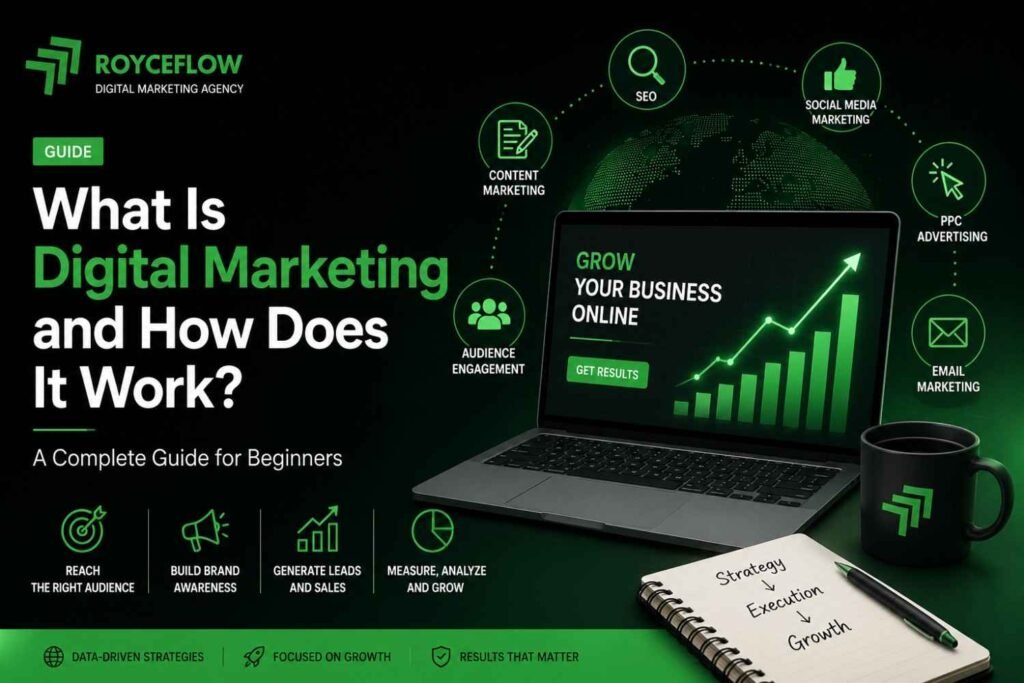
Digital marketing is the practice of promoting products, services, or brands using digital platforms and internet-based technologies. It involves reaching potential customers where they spend most of their time—online.
Unlike traditional marketing, digital marketing allows businesses to target specific audiences, measure campaign performance in real time, and optimize strategies for better results.
Common Digital Marketing Channels
Digital marketing consists of several specialized channels, including:
- Search Engine Optimization (SEO)
- Content Marketing
- Social Media Marketing
- Email Marketing
- Pay-Per-Click (PPC) Advertising
- Affiliate Marketing
- Influencer Marketing
- Video Marketing
- Mobile Marketing
Each channel plays a different role in helping businesses generate traffic, leads, and sales.
How Does Digital Marketing Work?
Digital marketing follows a structured process that moves potential customers from discovering your business to becoming loyal clients.
1. Build an Online Presence
The first step is creating a professional website or landing page where customers can learn about your business, products, or services.
2. Attract the Right Audience
Businesses attract visitors using various strategies such as:
- Search engine optimization (SEO)
- Blog articles
- Social media posts
- Paid advertisements
- YouTube videos
- Email campaigns
The goal is to drive targeted traffic rather than random visitors.
3. Engage Your Audience
Once visitors arrive, businesses provide valuable content that educates, informs, or solves a problem. This builds trust and establishes authority within the industry.
Examples include:
- Blog posts
- Case studies
- Videos
- Infographics
- Free guides
- Webinars
4. Convert Visitors into Leads
After building trust, businesses encourage visitors to take action by:
- Filling out a contact form
- Booking a consultation
- Downloading an eBook
- Signing up for a newsletter
- Requesting a quote
These actions help convert website visitors into potential customers.
5. Nurture and Close Sales
Not every visitor purchases immediately. Businesses continue building relationships through:
- Email marketing
- Retargeting ads
- Helpful content
- Personalized offers
This increases the chances of converting leads into paying customers.
6. Measure and Improve
One of digital marketing’s biggest advantages is data.
Businesses can monitor:
- Website traffic
- Keyword rankings
- Conversion rates
- Click-through rates
- Customer behavior
- Return on investment (ROI)
This information helps improve future campaigns and maximize results.
Benefits of Digital Marketing
Digital marketing offers several advantages over traditional marketing.
Wider Reach
Reach customers locally, nationally, or globally through online channels.
Cost-Effective
Many digital marketing strategies deliver excellent results with lower costs than traditional advertising.
Better Targeting
Target audiences based on location, age, interests, behavior, and demographics.
Measurable Results
Track every click, visit, lead, and sale using analytics tools.
Higher ROI
Optimize campaigns continuously to improve performance and generate better returns.
Improved Customer Relationships
Stay connected with customers through email, social media, and personalized communication.
Types of Digital Marketing
Search Engine Optimization (SEO)
SEO helps websites rank higher in search engines like Google, making it easier for potential customers to find your business organically.
Content Marketing
Creating valuable articles, videos, guides, and resources that educate your audience while building trust.
Social Media Marketing
Promoting your business on platforms such as Instagram, Facebook, LinkedIn, X, and YouTube to increase engagement and brand awareness.
Pay-Per-Click (PPC)
Running paid advertisements on Google or social media platforms to generate immediate traffic.
Email Marketing
Sending newsletters, offers, updates, and personalized messages to nurture customer relationships.
Video Marketing
Using videos to explain products, showcase expertise, and engage audiences across platforms.
Why Is Digital Marketing Important?
Consumers now research products online before making purchasing decisions.
Without a digital presence, businesses risk losing potential customers to competitors who are easier to find online.
A strong digital marketing strategy helps businesses:
- Increase brand visibility
- Generate qualified leads
- Build credibility
- Improve customer engagement
- Grow revenue
- Stay competitive
Is Digital Marketing Right for Every Business?
Yes.
Whether you’re a startup, local business, freelancer, eCommerce store, or large enterprise, digital marketing can help you connect with your ideal customers.
The strategies may vary depending on your goals, but every business benefits from having an effective online presence.
Final Thoughts
Digital marketing is more than simply posting on social media or running advertisements. It’s a comprehensive strategy that combines SEO, content creation, social media, email marketing, analytics, and paid campaigns to help businesses reach the right audience and achieve measurable growth.
As digital technologies continue to evolve, businesses that invest in digital marketing will be better positioned to build lasting customer relationships, increase visibility, and stay ahead of the competition.
If you’re looking to grow your business online, understanding how digital marketing works is the first step toward long-term success.