
Website design that converts isn’t just about beautiful visuals—it’s about creating an experience that turns visitors into customers.
Your website is more than just an online brochure—it’s your digital salesperson. A well-designed website doesn’t just look good; it guides visitors toward taking action, whether that’s contacting your business, requesting a quote, or making a purchase.
Many businesses invest heavily in beautiful designs but overlook the elements that actually drive conversions. If your website is attracting visitors but not generating leads or sales, it may be missing a few essential components.
Here are the seven elements every high-converting business website should have.
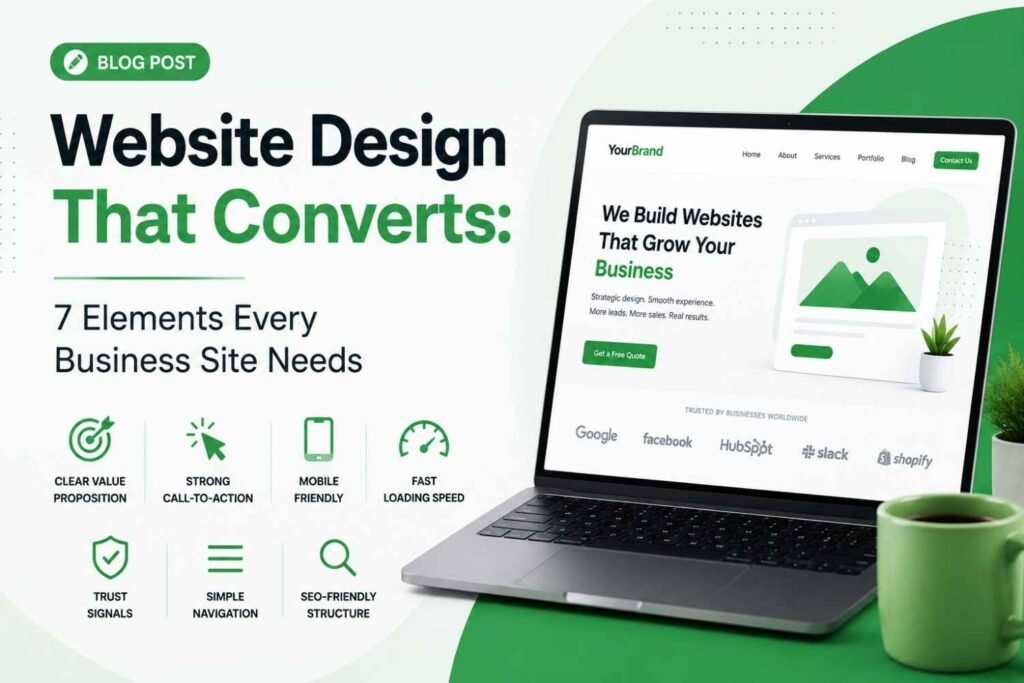
1. A Clear Value Proposition
Visitors decide within a few seconds whether they want to stay on your website. Your homepage should immediately answer three questions:
- What do you do?
- Who do you help?
- Why should someone choose you?
Instead of using vague headlines like “Welcome to Our Website,” use a benefit-focused statement.
Example:
“We help local businesses generate more leads through professional websites and SEO.”
Keep your headline clear, concise, and customer-focused.
2. Strong Call-to-Action (CTA)
Every page should guide visitors toward a specific action.
Common CTAs include:
- Get a Free Quote
- Book a Consultation
- Contact Us
- Schedule a Demo
- Download a Guide
Your CTA should stand out visually and appear multiple times throughout the page—not just at the bottom.
Remember, if visitors don’t know what to do next, they’ll often leave without taking any action.
3. Mobile-Friendly Design
More than half of all website traffic now comes from mobile devices. If your website isn’t optimized for smartphones and tablets, you’re losing potential customers.
A mobile-friendly website should:
- Load quickly
- Have easy-to-read text
- Use responsive layouts
- Include large, tappable buttons
- Make navigation simple
Google also prioritizes mobile-friendly websites in search rankings, making responsive design essential for both user experience and SEO.
4. Fast Loading Speed
Website speed directly impacts conversions.
A slow-loading website can increase bounce rates and reduce trust.
To improve speed:
- Compress images
- Minimize unnecessary plugins
- Enable browser caching
- Use a reliable hosting provider
- Optimize CSS and JavaScript files
Even a one-second improvement in loading time can significantly improve user engagement.
5. Trust Signals
People are more likely to buy from businesses they trust.
Build credibility by including:
- Customer testimonials
- Client logos
- Google reviews
- Case studies
- Industry certifications
- Awards
- Years of experience
- Secure HTTPS connection
These elements reassure visitors that your business is reliable and experienced.
6. Simple Navigation
Visitors should be able to find information without thinking.
Keep your navigation clean and organized.
A typical business website navigation includes:
- Home
- About
- Services
- Portfolio or Case Studies
- Blog
- Contact
Avoid cluttering the menu with too many pages. A clean navigation improves user experience and helps search engines understand your website structure.
7. SEO-Friendly Structure
A beautiful website is useless if no one can find it.
Design and SEO should work together.
An SEO-friendly website includes:
- Optimized page titles
- Proper heading hierarchy (H1, H2, H3)
- Internal linking
- Fast page speed
- Image alt text
- Clean URLs
- Structured content
- Local SEO optimization (for local businesses)
Building your website with SEO in mind helps attract consistent organic traffic over time.
Bonus Tips for Higher Conversions
Beyond these seven essentials, consider adding:
- Live chat support
- FAQ section
- Contact forms with fewer fields
- Sticky call-to-action buttons
- Social proof counters
- Lead magnets such as free audits or downloadable guides
Small improvements across multiple areas can significantly increase conversion rates.
Final Thoughts
A successful business website isn’t defined by flashy animations or trendy visuals—it’s built around the user. Every design decision should make it easier for visitors to understand your services, trust your business, and take the next step.
By focusing on a clear value proposition, strong calls-to-action, responsive design, fast performance, trust-building elements, intuitive navigation, and SEO best practices, you’ll create a website that not only looks professional but also generates real business results.
If your current website isn’t delivering the leads or sales you expected, reviewing these seven elements is an excellent place to start.