
Ranking on Google doesn’t happen overnight, but with the right strategy and consistent effort, significant improvements are possible within 90 days. Whether you’re a small business, startup, blogger, or eCommerce store owner, a structured SEO plan can help increase your visibility, drive qualified traffic, and generate more leads.
This guide breaks down a practical 90-day SEO roadmap that focuses on building a strong foundation, creating valuable content, optimizing your website, and improving your search rankings.
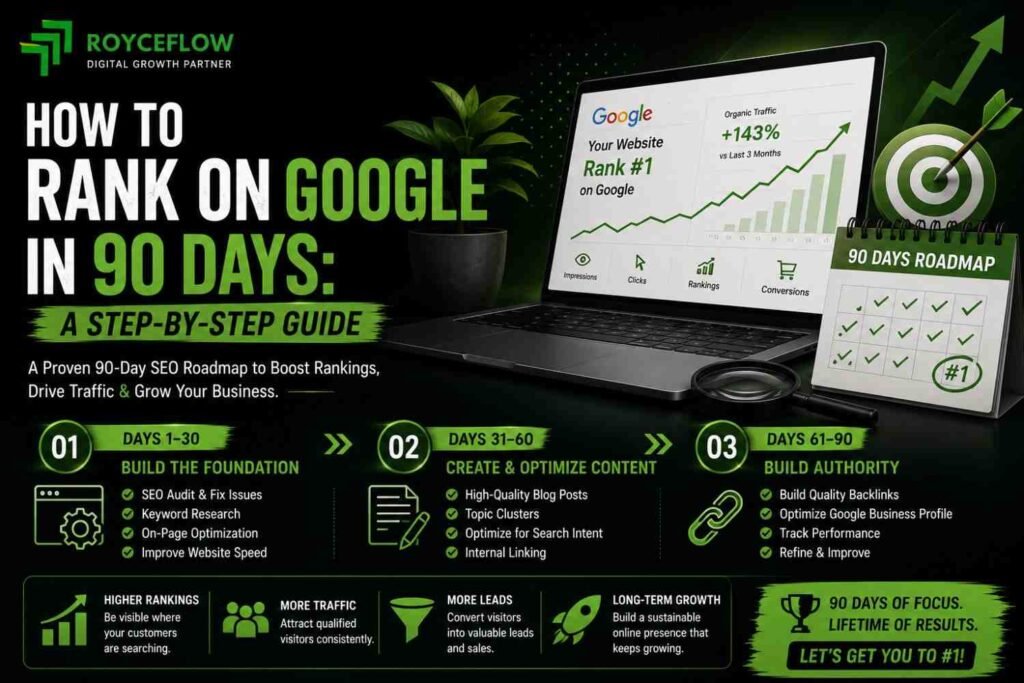
Days 1–30: Build a Strong SEO Foundation
The first month is all about preparing your website for long-term success.
Perform an SEO Audit
Begin by identifying technical and on-page issues that may affect your rankings.
Check for:
- Broken links
- Slow page speed
- Mobile usability
- Missing meta titles and descriptions
- Duplicate content
- Crawl errors
- Indexing issues
Fixing these issues creates a solid base for future SEO efforts.
Conduct Keyword Research
Identify keywords your target audience is searching for.
Focus on:
- Primary keywords
- Long-tail keywords
- Local keywords
- Question-based searches
- Commercial intent keywords
Prioritize keywords that have reasonable search volume and achievable competition.
Optimize Existing Pages
Improve your most important pages by:
- Writing compelling title tags
- Creating engaging meta descriptions
- Using proper heading structures
- Adding internal links
- Optimizing images
- Improving readability
Small changes often lead to noticeable ranking improvements.
Improve Website Speed
A fast website provides a better user experience and supports SEO.
Optimize by:
- Compressing images
- Enabling browser caching
- Minimizing CSS and JavaScript
- Using a Content Delivery Network (CDN)
- Choosing reliable hosting
Days 31–60: Publish High-Quality Content
Content is one of the strongest ranking factors.
Create articles that answer your audience’s questions and solve real problems.
Examples include:
- How-to guides
- Industry insights
- Case studies
- Comparison articles
- Beginner tutorials
- Frequently Asked Questions
Aim to publish valuable, original content consistently.
Build Topic Clusters
Instead of publishing random articles, organize your content around core topics.
Example:
Main Topic: SEO
Supporting articles:
- What Is SEO?
- On-Page SEO Checklist
- Technical SEO Guide
- Local SEO Tips
- SEO Mistakes to Avoid
- Keyword Research Guide
Internal linking between related articles strengthens topical authority.
Optimize for Search Intent
Google rewards pages that best satisfy user intent.
Ask yourself:
- Does this article answer the searcher’s question?
- Is the content easy to read?
- Does it provide actionable advice?
- Is it more helpful than competing pages?
Create content for people first, search engines second.
Improve Internal Linking
Link related pages together naturally.
Internal links help:
- Search engines discover content
- Pass authority between pages
- Keep visitors on your website longer
Days 61–90: Build Authority
Once your website has quality content, focus on increasing authority.
Earn Quality Backlinks
High-quality backlinks improve credibility and rankings.
Strategies include:
- Guest posting
- Digital PR
- Resource pages
- Industry directories
- Partnerships
- Publishing original research
Focus on earning relevant and trustworthy links.
Optimize Google Business Profile
If you serve local customers, keep your Google Business Profile updated.
Include:
- Business information
- Services
- Photos
- Reviews
- Business hours
Regular updates improve local search visibility.
Monitor SEO Performance
Track your progress using:
- Google Analytics 4
- Google Search Console
- Keyword tracking tools
Monitor:
- Organic traffic
- Keyword rankings
- Click-through rates
- Indexed pages
- Leads generated
Adjust your strategy based on performance data.
SEO Checklist for the First 90 Days
Complete the following tasks during your first three months:
- Perform a complete SEO audit
- Fix technical SEO issues
- Conduct keyword research
- Optimize existing pages
- Improve website speed
- Publish high-quality blog content
- Create topic clusters
- Build internal links
- Earn quality backlinks
- Optimize your Google Business Profile
- Track rankings and website traffic
- Continuously update older content
Common SEO Mistakes to Avoid
Many websites struggle because they:
- Target overly competitive keywords
- Publish thin content
- Ignore technical SEO
- Have slow-loading pages
- Forget internal linking
- Skip image optimization
- Neglect mobile usability
- Expect immediate results
Avoiding these mistakes improves your chances of ranking faster.
How Long Does SEO Take?
SEO is a long-term strategy, but many websites begin seeing measurable improvements within 90 days when consistent optimization is combined with quality content and technical best practices.
More competitive industries may take longer, while local businesses and niche websites can often achieve quicker results.
Final Thoughts
Ranking on Google in 90 days requires consistency, patience, and a structured SEO strategy. By focusing on technical optimization, high-quality content, keyword research, internal linking, and authority building, you can improve your search visibility and create a strong foundation for long-term organic growth.
SEO isn’t about shortcuts—it’s about delivering valuable content, providing an excellent user experience, and continuously improving your website over time.
Frequently Asked Questions
Can I rank on Google in 90 days?
Yes. While first-page rankings are not guaranteed, many websites experience significant improvements within 90 days by consistently implementing SEO best practices.
How many blog posts should I publish?
Publishing 1–2 high-quality articles each week is a good starting point. Consistency is more important than quantity.
Are backlinks still important in 2026?
Yes. High-quality backlinks remain a strong ranking signal, especially when they come from relevant and authoritative websites.
Is technical SEO necessary?
Absolutely. Technical SEO helps search engines crawl, index, and understand your website, making it an essential part of any SEO strategy.
What’s the biggest factor in SEO success?
The biggest factor is consistently creating helpful, high-quality content that satisfies search intent while maintaining a technically optimized website.